Case study · GoTo
Build the System Before the AI
Challenge
GoTo wanted AI in its customer-communication products, but there was no clear picture of how businesses would adopt or trust it, no defined workflows to automate, and a UX team still working as ticket-takers.
Action
Before any AI shipped, I built the foundation: customer research, defined workflows, and success metrics. Then I took AI from governed exploration to product, designing for trust, transparency, and control.
Impact
AI Receptionist became the most successful launch in GoTo history by speed to target, hitting its numbers in its launch quarter. It became the foundation for agentic AI and the CX products.
AI Receptionist hit its targets in its launch quarter (Q2 2025), per the product team
MeasuredAdoption rose month over month; customers on consumption-based pricing adopted faster than those on seat-based subscriptions
Directionaldesigners and researchers on the AI builds, all reporting to me
TeamAI Agent built by my direct team; released and in early use when I left
Fact- Organization
- GoTo, across Contact Center, AI Receptionist, AI Agent, and the CX products
- Role
- UX lead for the AI strategy and part of the AI Steering Committee's leadership
- Team
- Started with one staff designer in Star Trek. Across the AI Receptionist and AI Agent builds, my team of seven designers (four staff, one senior, and two product designers) and two researchers, all reporting to me, partnering with two content designers and with Product and Engineering
- Timeframe
- From the 2022 foundation work through AI Receptionist's Q2 2025 launch and AI Agent's release
The Challenge
In 2022, design at GoTo worked as a ticket-taking function. Research didn't inform product decisions, experiences were fragmented with no journey thinking, and there was little instrumentation to show what users actually did.
Then the company moved quickly into AI-driven customer interaction, first AI Receptionist and then AI Agent, with no established usage patterns to build on. Nobody knew how small businesses would adopt AI that answers their phones, or whether they'd trust it. Without defined workflows and outcomes, it was hard to scope what to automate or how to tune the model's behavior. The AI's language, users' expectations, and its real capabilities didn't line up.
My read was blunt: AI wouldn't create value here, because the organization didn't yet understand its users, their workflows, or what success looked like.
Mandate: How do we make AI something customers trust and adopt, when the system it depends on hasn't been defined yet?
My Role
| Owned | Led | Partnered on |
|---|---|---|
| UX strategy and vision for AI Receptionist and AI Agent | My team's first build of AI Agent | Tuning model behavior from real usage, with Product and Engineering |
| The trust-first approach: transparency, control, education | The AI beta programs for the automotive vertical | AI Steering Committee direction on responsible adoption, as part of its leadership |
| The team's move to AI-enabled design and research workflows | The Star Trek exploration team | Two third-party AI partners, including Tribe, to get LLM usage off the ground |
| Personas, workflows, and success metrics for AI adoption | ML and AI evaluations with my research team | AI content with two content designers; outcome metrics in Mixpanel, Tableau, and Qualtrics |
Approach
Phase 1: Build the foundation, before any AI
Until we understood the work, there was nothing worth automating. I built cross-functional alignment across Support, Customer Success, Marketing, Product, and Engineering, and launched the Insiders program: beta users, a Customer Advisory Board, and a Partner Advisory Board. I introduced Jobs to Be Done, and with my partners defined the metrics that would later judge the AI: first-call resolution, call deflection, average handle time, fewer transfers, and supervisor visibility.
Phase 2: Governed exploration (Star Trek, spring 2023)
As part of the AI Steering Committee's leadership, I helped set the direction for responsible adoption. We evaluated external AI vendors on capability and risk, and partnered with two third parties, including Tribe, to get our LLM usage off the ground. I also created Star Trek, a UX-led exploration team that started with one of my staff designers and an engineer working in 2-week cycles. Their scope was model capabilities, risks, and cost models; early product applications; and sharing what they learned across the company. The result was that scattered AI experiments became a governed, strategic capability.
Phase 3: Build the first AI tools (Moonshot, fall 2023)
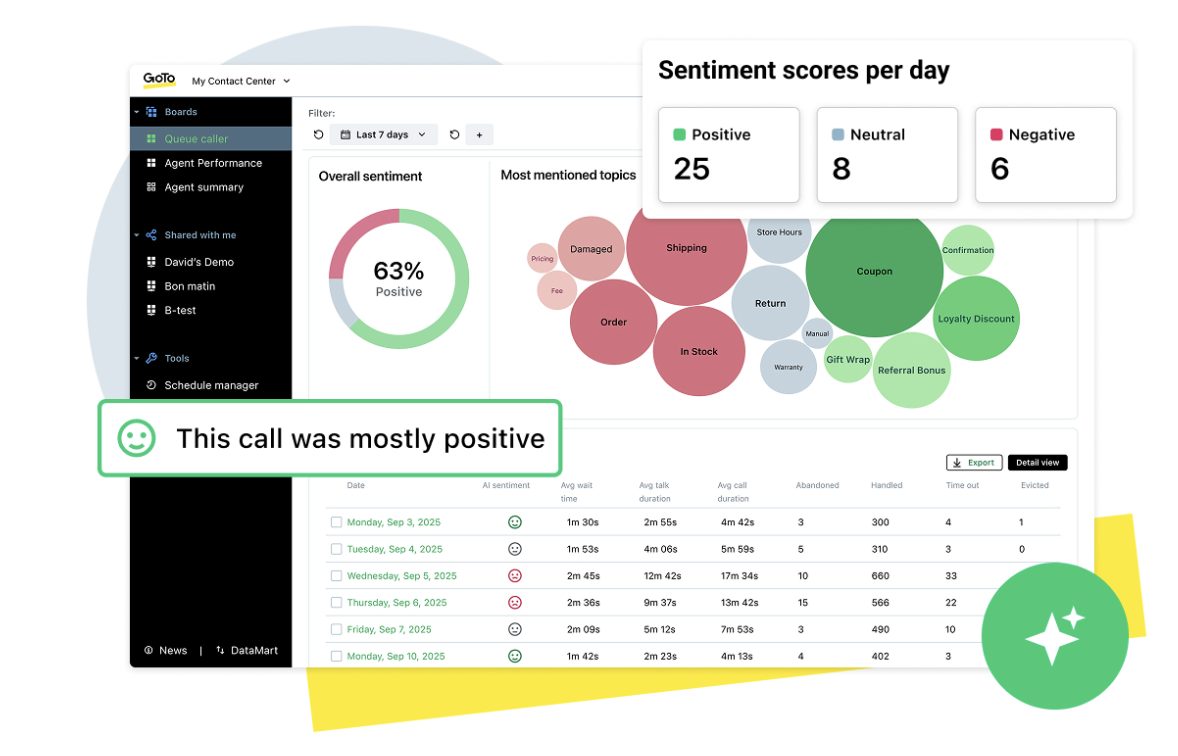
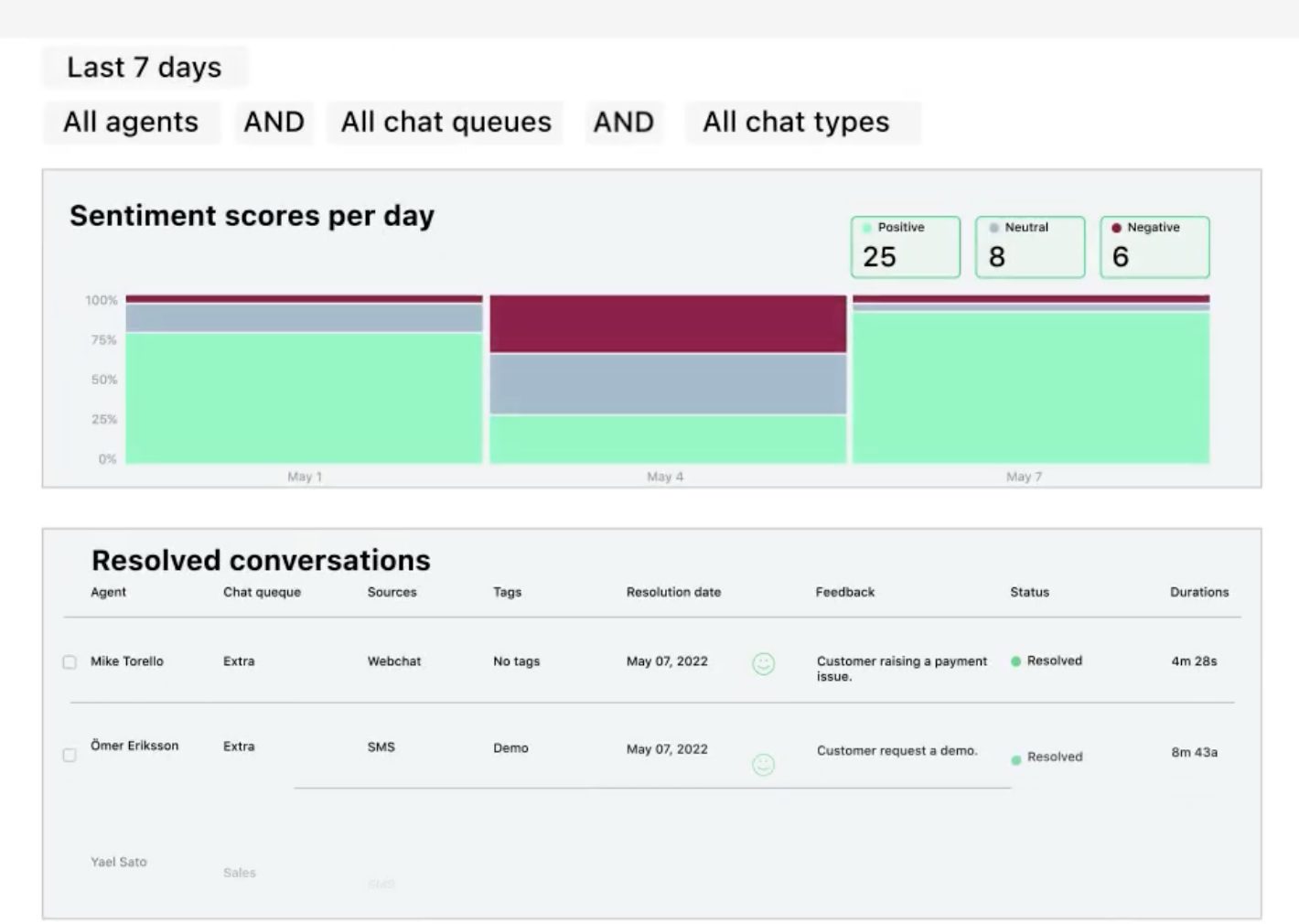
Star Trek's exploration fed Moonshot: 90 days to build AI tools in Contact Center. We designed the workflows manually first (structured conversation tagging, reporting, and supervisor insights), then added mood and topic detection and AI-driven reporting, framed as assistive AI around the supervisor and agent roles. It succeeded, and it laid the groundwork for AI Receptionist the following year.
AI requires a well-defined system. Without one, automation amplifies noise.
Phase 4: Scale AI and research across the org
I made AI fluency part of how the team worked: ChatGPT for ideation and synthesis, Miro and Mural AI for pattern-finding, and Figma Make, Lovable, and Dyad for rapid prototyping. Research ran continuously. Condens and AI-assisted synthesis made insight searchable, and Insiders became a standing validation engine. The team moved from linear, siloed handoffs to parallel, iterative work, with design closer to code.
Phase 5: AI as product (AI Receptionist → AI Agent)
AI Receptionist handled call routing, message capture, appointment scheduling, and call deflection. Early adoption was low, because people feared the technology and didn't understand it. We worked through it with Insiders and beta customers.
We had already learned this the hard way. Customer Engagement used AI to help customers write text and email campaign messaging, and Admin Copilot was an AI bot that helped drive purchasing. Both showed the same thing: customers didn't understand how the AI worked or what it could do. Those lessons shaped three problems we designed for:
- Transparency: making AI output trustworthy. Users struggled to understand what had happened on a call and whether to trust the AI's summaries and transcripts. We redesigned how that information was presented, so users could drill down from a summary into the right areas of reporting and check it for themselves. Every change came from user feedback.
- Control: making configuration understandable. Editable greetings and the different modes users could build were hard to grasp. Users couldn't tell what the AI would do in each case. Making setup legible was an ongoing focus of our research and testing.
- Education: content that explains AI as it goes. We rewrote the in-product content many times, across multiple rounds of research and testing, until it told users plainly what the AI would do and pointed them to the right next step.
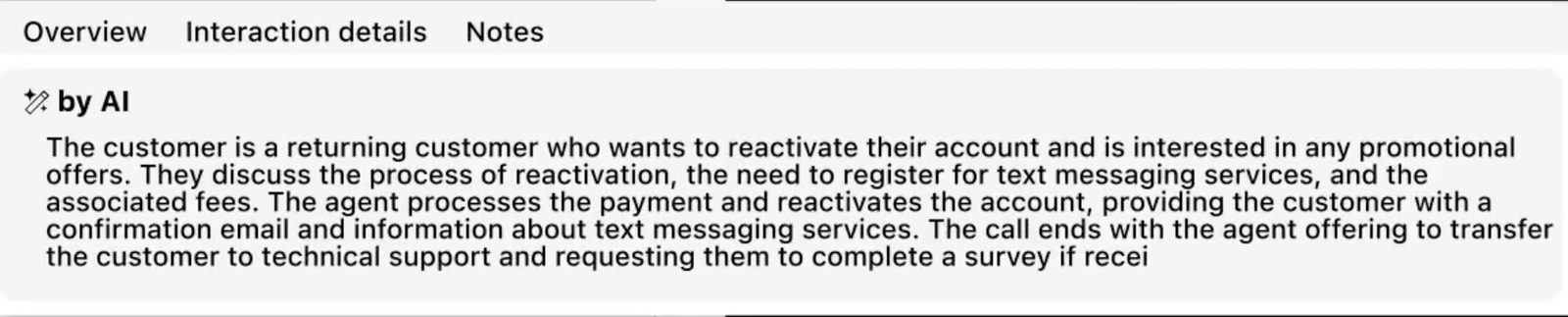
We tuned the model's behavior continuously from real usage, through alpha and beta programs and usability and A/B testing.
Measure what users actually do
Sign-ups and payments weren't how we measured adoption. The app was instrumented, and in Mixpanel we tracked what customers actually did: how many calls went through, whether they clicked into reports, and where they got stuck. Every measure mapped to the user outcomes we'd defined, and each of those connected to a business goal.
As part of the leadership team, I met weekly to review those metrics and adjust the roadmap, either reprioritizing or going back to fix something before moving on.
AI Agent moved toward agentic automation: AI built into workflows and carrying out tasks behind the scenes, rather than a standalone feature. My direct team did the entire first build. It was released and in early use as I left.
Key Artifact
The first two phases involved no AI at all. That's the point: by the time AI Receptionist shipped, the workflows, metrics, and customer relationships it depended on were already in place.
Results & Impact
Business
- AI Receptionist was the most successful launch in GoTo history by speed to target. It launched in Q2 2025 and hit its numbers that quarter.
- Adoption rose steadily month over month. Customers on consumption-based pricing adopted faster than those on seat-based subscriptions, a useful signal for pricing and onboarding.
- Call deflection was trending toward its goal, alongside efficiency gains and a contribution to revenue goals.
- It became the foundation for AI Agent, which my team built and released, and for expanding the CX products.
Customers
- Early fear and confusion gave way to steady adoption, once customers could check what the AI had done, understand its configuration, and follow content that explained it plainly.
Organization
- AI went from scattered experiments to a governed capability with a clear direction for responsible use.
- The team moved from linear, static deliverables to parallel, iterative, AI-assisted work, without giving up craft on quality, trust, and scale.
- Planning shifted from output to outcomes, on weekly through quarterly cadences tied to revenue, acquisition, adoption, and retention, instrumented in Mixpanel and Tableau.
Reflection
What I learned
- Workflow clarity, not AI sophistication, drove the success.
- AI didn't change the job. It changed the speed, the scale, and the consequences.
- The new risk is building the wrong thing faster than ever. Continuous research, clear metrics, and product discipline are the counterweight.
What I'd do differently
I'd have gone deeper into AI myself, earlier. I was leading a large team across North America, Europe, and India with a heavy workload, so I relied on my team to track how fast the technology was moving. I should have educated myself sooner and stayed closer to the details as they changed.
I'd also have built relationships sooner with the product people working alongside my AI designers. There were staffing gaps on that work, and I would have escalated them faster to get the right people in place.